Autor: Capitán

  • De Stratford-upon-Avon al Siglo XXIV: Shakespeare en el Puente del Enterprise y el Legado de Sir Patrick Stewart

    De Stratford-upon-Avon al Siglo XXIV: Shakespeare en el Puente del Enterprise y el Legado de Sir Patrick Stewart

    CULTURAL ARCHIVE // RSC-SHAKESPEARE-24C // STARDATE 41153.7 STARFLEET HISTORICAL RECORD · ES / EN

    El Globo de Londres en la Sala Lista: Cómo Shakespeare Dio Voz al Siglo XXIV

    The Globe Theatre in the Ready Room: How Shakespeare Gave Voice to the 24th Century

    “What a piece of work is man! How noble in reason! How infinite in faculty!” — Hamlet, Act II, Scene 2
    «¡Qué obra maestra es el hombre! ¡Cuán noble por su razón! ¡Cuán infinito en facultades!» — Hamlet, Acto II, Escena 2

    Telemetría y Ficha del Registro

    Log Telemetry & Dossier

    • Compañía Teatral:Theatre Company:Royal Shakespeare Company (Stratford-upon-Avon, 1966–1993)
    • Obras Citadas en TNG:Plays Featured in TNG:Hamlet, Henry V, The Tempest, Julius Caesar, Sonnet 18
    • Reliquia del Camarote:Ready Room Artifact:Obras Completas de Shakespeare (Edición Folio Encuadernada)
    • Intérprete Principal:Lead Interpreter:Sir Patrick Stewart OBE (Knight Bachelor)

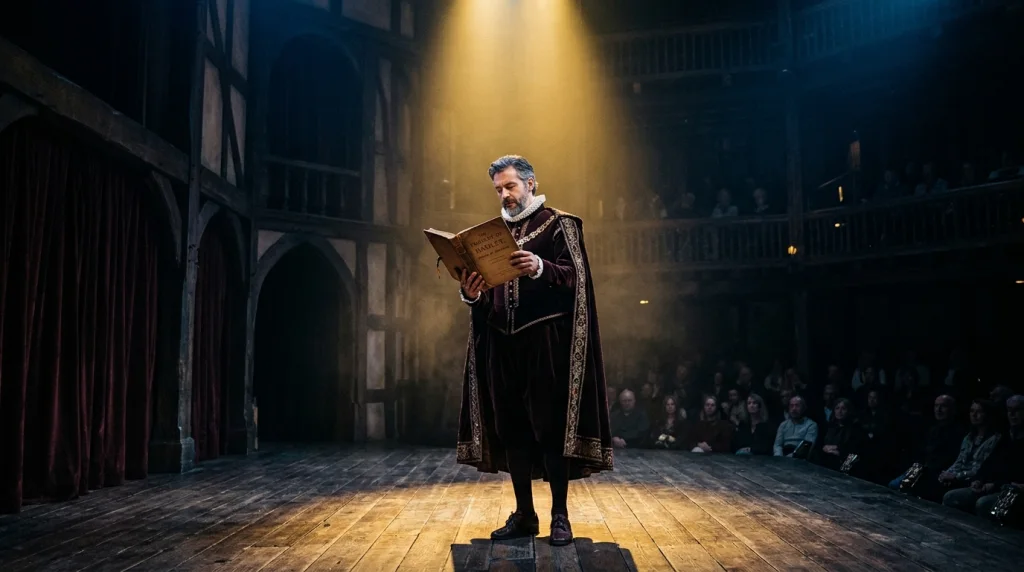
    William Shakespeare en el puente del USS Enterprise-D y la trayectoria de Sir Patrick Stewart en la Royal Shakespeare Company / Shakespeare in Star Trek
    CULTURAL ARCHIVE // RSC-SHAKESPEARE-24C STARDATE 41153.7

    1. El Folio Encuadernado en Piel de la Sala Lista

    En una esquina del escritorio del Capitán Jean-Luc Picard, dentro de la Sala Lista del USS Enterprise NCC-1701-D y más tarde en el Enterprise-E, permanece siempre abierto por una página marcada con cinta de seda un volumen encuadernado en cuero antiguo: las Obras Completas de William Shakespeare. Aquel detalle de utilería no era un simple adorno escenográfico; era el tributo de los guionistas de Star Trek: The Next Generation a los veintisiete años que Sir Patrick Stewart dedicó a la Royal Shakespeare Company (RSC) antes de vestir el uniforme de la Flota Estelar.

    Desde el primer episodio de la serie («Encounter at Farpoint» y «Hide and Q»), cuando Q reta a Picard y este le responde declamando el monólogo de Hamlet («¡Qué obra maestra es el hombre!»), el Bardo de Avon se convirtió en el espejo moral con el que el siglo XXIV examina la condición humana.

    2. «Enrique V» y «La Tempestad» en la Holocubierta con Data

    A lo largo de las siete temporadas, Picard utiliza el teatro de Shakespeare para enseñar al Comandante Data qué significa ser humano. En «The Defector» (TNG 3×10), Picard dirige a Data en la Holocubierta interpretando la escena del campamento nocturno antes de la batalla de Agincourt en Enrique V (Acto IV, Escena 1), donde el rey se disfraza de soldado común para escuchar los temores de sus hombres en la víspera del combate. Minutos después, Picard aplica esa misma lección shakesperiana en la Zona Neutral frente a los pájaros de guerra romulanos.

    En «Emergence» (TNG 7×23), la escena se abre con Data interpretando a Próspero en La Tempestad bajo la mirada atenta de Picard: «Estamos hechos de la misma materia que los sueños», mientras la propia computadora del Enterprise comienza a soñar una nueva forma de vida.

    3. El Soneto 18 frente a los Ferengi y el Legado de la RSC

    Incluso en la comedia luminosa, el entrenamiento clásico de Stewart brilla sin rival: en «Ménage à Troi» (TNG 3×24), para rescatar a Lwaxana y Deanna Troi del Daimon Tog, Picard finge unos celos apasionados y recita el Soneto 18 («¿Debería compararte con un día de verano?») y versos de Otelo hasta lograr que los Ferengi huyan desconcertados.

    Como analiza nuestro Homenaje Editorial a Sir Patrick Stewart, su mayor regalo a la cultura contemporánea fue demostrar que un capitán de nave estelar y un rey de Shakespeare hablan exactamente el mismo idioma: el de la dignidad, la palabra justa y la conciencia humana frente al infinito.

    Nota de Archivo E-E-A-T: La profundidad dramática y filosófica de este registro es inseparable de su rigurosa formación en la Royal Shakespeare Company analizada en nuestro memorial de Sir Patrick Stewart, donde documentamos cómo el legado interpretativo de Sir Patrick Stewart como el Capitán Jean-Luc Picard transformó para siempre la ciencia ficción contemporánea.

    1. The Leather-Bound Folio in the Ready Room

    Resting permanently in a glass display case inside Captain Jean-Luc Picard’s Ready Room aboard the USS Enterprise NCC-1701-D—and later transferred to the Enterprise-E and his study in La Barre—lies an antique leather-bound volume held open by a silk ribbon: the Complete Works of William Shakespeare. That prop was far more than set dressing; it was a tribute by the writers of Star Trek: The Next Generation to the twenty-seven years Sir Patrick Stewart spent with the Royal Shakespeare Company (RSC) before donning a Starfleet uniform.

    From the earliest episodes of the first season (“Hide and Q”), when Picard answers Q’s arrogance by reciting Hamlet (“What a piece of work is man!”), the Bard of Avon became the philosophical lens through which the 24th century examines the human condition.

    2. «Henry V» and «The Tempest» on the Holodeck with Data

    Across all seven seasons, Picard uses Shakespearean drama to mentor Commander Data in the nuances of human emotion and leadership. In “The Defector” (TNG 3×10), Picard coaches Data on the Holodeck as King Henry disguised in a cloak on the eve of the Battle of Agincourt in Henry V (Act IV, Scene 1), teaching the android that a true commander must know the hearts and fears of his crew before leading them into peril—a lesson Picard immediately puts into practice along the Romulan Neutral Zone.

    Later, in “Emergence” (TNG 7×23), Data performs Prospero’s epilogue from The Tempest under Picard’s guidance—“We are such stuff as dreams are made on”—just as the Enterprise’s own computer network begins dreaming a new emergent intelligence into being.

    3. Sonnet 18 Against the Ferengi and the RSC Legacy

    Even in moments of high comedy, Stewart’s classical command shines: in “Ménage à Troi” (TNG 3×24), to rescue Lwaxana and Deanna Troi from Daimon Tog, Picard feigns theatrical jealousy and declaims Sonnet 18 (“Shall I compare thee to a summer’s day?”) and lines from Othello with such operatic intensity that the Ferengi retreat in bewilderment.

    As chronicled in our Sir Patrick Stewart Memorial Tribute, his greatest gift to modern culture was proving that a starship bridge and the stage at Stratford-upon-Avon share the exact same foundation: the power of the spoken word, moral courage, and human conscience facing the infinite.

    E-E-A-T Archival Note: The dramatic and philosophical gravitas of this log entry stems directly from his rigorous Royal Shakespeare Company training analyzed in our Sir Patrick Stewart memorial, where we chronicle how the acting legacy of Sir Patrick Stewart as Captain Jean-Luc Picard forever elevated modern science fiction.

  • Especificaciones Tácticas del USS Enterprise NCC-1701-E (Clase Sovereign) y la Maniobra Picard

    Especificaciones Tácticas del USS Enterprise NCC-1701-E (Clase Sovereign) y la Maniobra Picard

    TACTICAL DOSSIER // SOVEREIGN-1701-E // STARDATE 49827.5 STARFLEET HISTORICAL RECORD · ES / EN

    Del USS Stargazer al Enterprise-E: Evolución Táctica y la Maniobra Picard

    From the USS Stargazer to the Enterprise-E: Tactical Evolution and the Picard Maneuver

    “Assimilate this! … Sovereign class: the most advanced starship in the fleet.”
    «¡Asimilen esto! … Clase Sovereign: la nave estelar más avanzada de la flota.»

    Telemetría y Ficha del Registro

    Log Telemetry & Dossier

    • Astillero / Diseño:Shipyard / Designer:San Francisco Fleet Yards // Concept: John Eaves
    • Dimensiones:Dimensions:Eslora: 685.7 m · Manga: 250.6 m · 24 Cubiertas / Decks
    • Velocidad Máxima:Maximum Velocity:Warp 9.985 (Barquillas de Geometría Avanzada)
    • Armamento Principal:Primary Armament:16 Baterías Fáser Tipo XII + Torpedos Cuánticos
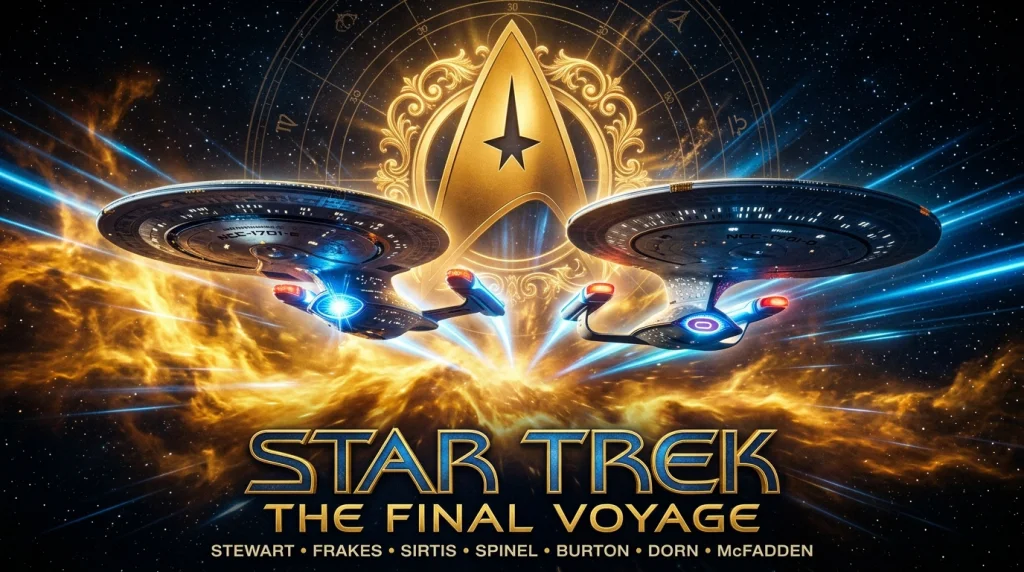
    Naves estelares USS Enterprise NCC-1701-E Clase Sovereign y USS Stargazer en maniobra táctica / USS Enterprise-E Sovereign class tactical dossier
    TACTICAL DOSSIER // SOVEREIGN-1701-E STARDATE 49827.5

    1. El Origen Táctico: El USS Stargazer y la Batalla de Maxia (2355)

    Antes de comandar los dos buques insignia más célebres de la Federación, un joven Jean-Luc Picard estuvo al mando durante veintidós años del crucero de exploración pesada clase Constellation USS Stargazer (NCC-2893). En el año 2355, en el sistema Maxia Zeta, el Stargazer fue emboscado por una nave de guerra ferengi no identificada. Con los escudos caídos, el casco en llamas y los sensores enemigos apuntando a quemarropa, Picard improvisó una maniobra sin precedentes en la guerra espacial.

    Aprovechando que la luz viaja más despacio que una nave en curvatura, Picard ordenó un micro-salto a alto Warp directamente hacia la nave enemiga deteniéndose a pocos kilómetros de su proa. Durante unos segundos críticos, los sensores ópticos ferengi detectaron al Stargazer en dos lugares al mismo tiempo, disparando contra el fantasma lumínico mientras Picard destruía al atacante real. Bautizada como la «Maniobra Picard», sigue siendo de estudio obligatorio en la Academia de la Flota Estelar.

    2. El Nacimiento de la Clase Sovereign tras Wolf 359

    La amenaza del Colectivo Borg y la creciente tensión con el Dominio llevaron al Cuerpo de Ingenieros de la Flota Estelar a desarrollar una nueva generación de naves capitales. Diseñado por John Eaves y botado en los Astilleros de San Francisco en la Fecha Estelar 49827.5 (2372), el USS Enterprise NCC-1701-E prescindió de familias a bordo para convertirse en el crucero táctico y científico más formidable del Cuadrante Alfa.

    3. Torpedos Cuánticos, Fáseres Tipo XII y Blindaje Ablativo

    Con una eslora estilizada de 685,7 metros distribuida en 24 cubiertas y un casco fusionado sin cuello vulnerable entre el platillo y la sección secundaria, el Enterprise-E incorporó el armamento más avanzado desarrollado en Júpiter Station: 16 baterías de fáseres Tipo XII, 10 tubos lanzatorpedos y una torreta ventral de disparo rápido de torpedos cuánticos (ojivas de energía de punto cero con el doble de poder destructivo que los torpedos de fotones), además de blindaje ablativo en el casco y el Holograma Médico de Emergencia (EMH).

    4. Historial de Combate: Sector 001, el Parche Briar y la Falla de Bassen

    Al mando del Enterprise-E, el Capitán Picard destruyó el Cubo Borg en la Batalla del Sector 001 y persiguió a la esfera temporal hasta el año 2063 (Star Trek: First Contact), ejecutó la maniobra Riker en la nebulosa del Parche Briar (Insurrection) y embistió a toda potencia de impulso al acorazado pretoriano Scimitar de Shinzon en la Falla de Bassen para salvar a la Tierra (Nemesis).

    Nota de Archivo E-E-A-T: La profundidad dramática y filosófica de este registro es inseparable de su rigurosa formación en la Royal Shakespeare Company analizada en nuestro memorial de Sir Patrick Stewart, donde documentamos cómo el legado interpretativo de Sir Patrick Stewart como el Capitán Jean-Luc Picard transformó para siempre la ciencia ficción contemporánea.

    1. Tactical Origins: The USS Stargazer and the Battle of Maxia (2355)

    Long before commanding the Federation’s two greatest flagships, a young Jean-Luc Picard spent twenty-two years in the center seat of the Constellation-class heavy cruiser USS Stargazer (NCC-2893). In 2355, in the Maxia Zeta system, the Stargazer was ambushed by an unidentified Ferengi warship. With shields collapsed, the hull ablaze, and enemy weapons locked on at point-blank range, Picard improvised a maneuver unprecedented in starship combat.

    Exploiting the fact that faster-than-light warp travel outpaces light-speed optical sensors, Picard ordered a split-second high-warp jump directly toward the attacking vessel, dropping out of warp right off its bow. For several critical seconds, the enemy sensors registered the Stargazer in two places simultaneously—firing on the lingering light-ghost image while Picard destroyed the real target. Immortalized as the “Picard Maneuver,” it remains required study at Starfleet Academy.

    2. Birth of the Sovereign Class After Wolf 359

    The existential threat of the Borg Collective and rising tensions with the Dominion prompted the Starfleet Corps of Engineers to design a new breed of capital ship. Conceived by production illustrator John Eaves and launched from the San Francisco Fleet Yards on Stardate 49827.5 (2372), the USS Enterprise NCC-1701-E omitted civilian families to serve as the most formidable tactical and scientific vessel in the Alpha Quadrant.

    3. Quantum Torpedoes, Type-XII Phasers, and Ablative Armor

    Measuring a sleek 685.7 meters across 24 decks with an integrated dorsal spine eliminating the vulnerable neck of older classes, the Enterprise-E mounted the cutting-edge weaponry developed after Wolf 359: 16 Type-XII phaser arrays, 10 torpedo tubes, and a rapid-fire ventral turret armed with quantum torpedoes (zero-point energy warheads delivering twice the destructive yield of standard photon torpedoes), complemented by ablative hull armor and the Emergency Medical Hologram (EMH).

    4. Combat Record: Sector 001, the Briar Patch, and the Bassen Rift

    From the bridge of the Enterprise-E, Captain Picard coordinated the destruction of the Borg Cube at the Battle of Sector 001 and pursued the temporal sphere back to 2063 (Star Trek: First Contact), defended the Ba’ku in the Briar Patch (Insurrection), and rammed Shinzon’s Reman warbird Scimitar at full impulse inside the Bassen Rift to save Earth from thalaron radiation (Nemesis).

    E-E-A-T Archival Note: The dramatic and philosophical gravitas of this log entry stems directly from his rigorous Royal Shakespeare Company training analyzed in our Sir Patrick Stewart memorial, where we chronicle how the acting legacy of Sir Patrick Stewart as Captain Jean-Luc Picard forever elevated modern science fiction.
  • Especificaciones Técnicas del USS Enterprise NCC-1701-D (Clase Galaxy): El Buque Insignia de la Federación

    Especificaciones Técnicas del USS Enterprise NCC-1701-D (Clase Galaxy): El Buque Insignia de la Federación

    TECH MANUAL // GALAXY-CLASS-1701-D // STARDATE 40759.5 STARFLEET HISTORICAL RECORD · ES / EN

    Ingeniería de Utopia Planitia: Arquitectura, Propulsión y Sistemas LCARS de la Clase Galaxy

    Utopia Planitia Engineering: Architecture, Propulsion, and LCARS Systems of the Galaxy Class

    “Let’s make sure history never forgets the name… Enterprise.”
    «Asegurémonos de que la historia jamás olvide el nombre… Enterprise.»

    Telemetría y Ficha del Registro

    Log Telemetry & Dossier

    • Astillero / Diseño:Shipyard / Designer:Utopia Planitia (Marte) // Concept: Andrew Probert
    • Dimensiones:Dimensions:Eslora: 642.5 m · Manga: 463.7 m · 42 Cubiertas / Decks
    • Desplazamiento / Masa:Displacement / Mass:4,500,000 Toneladas Métricas / Metric Tons
    • Computadora / OS:Main Computer / OS:3 Núcleos Duotrónicos Isolineales // LCARS OS
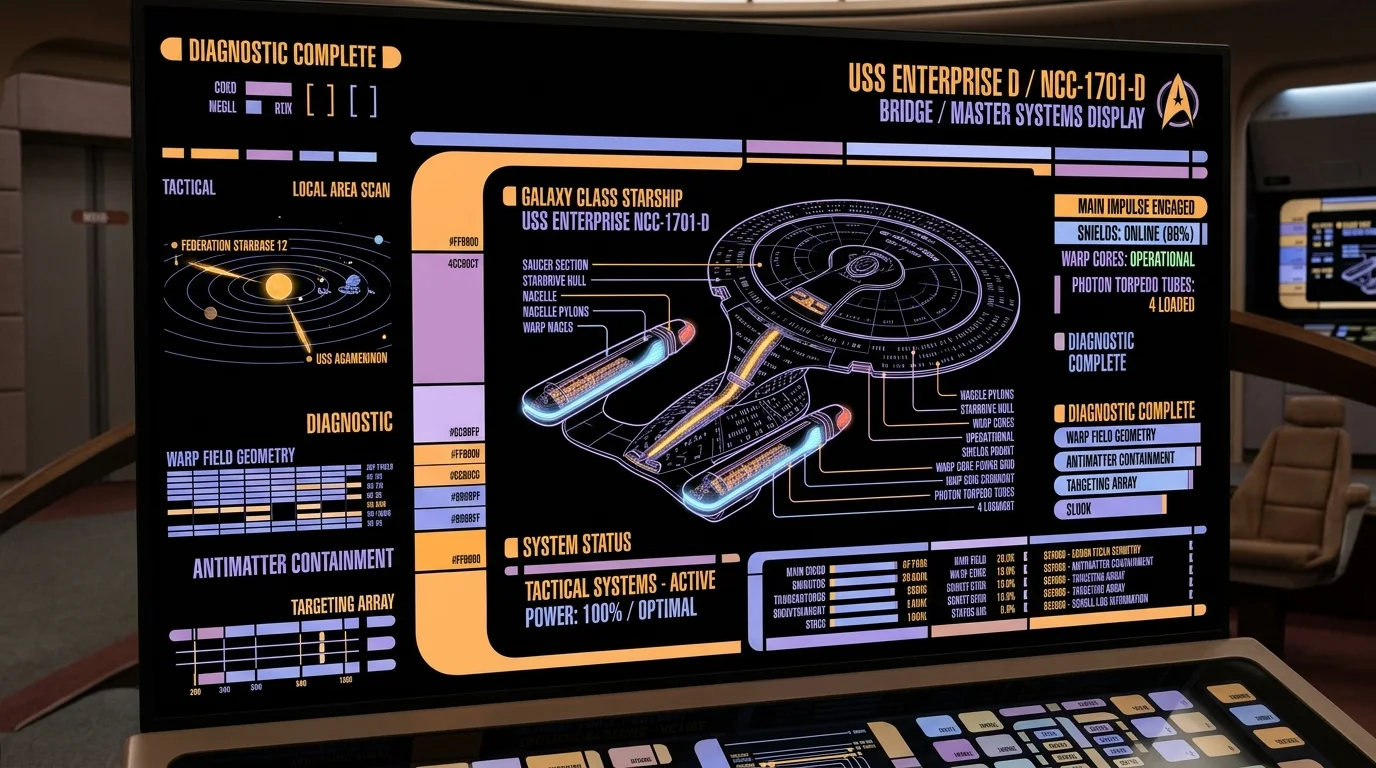
    Diagrama Maestro de Sistemas LCARS del USS Enterprise NCC-1701-D Clase Galaxy / USS Enterprise-D Galaxy-class LCARS Master Systems Display
    TECH MANUAL // GALAXY-CLASS-1701-D STARDATE 40759.5

    1. Filosofía de Diseño: Una Ciudad Diplomática entre las Estrellas

    Botado desde los astilleros orbitales de Utopia Planitia en Marte en la Fecha Estelar 40759.5 (año 2363) bajo el mando del Capitán Jean-Luc Picard, el USS Enterprise NCC-1701-D representa el cenit de la edad de oro de exploración pacífica de la Federación Unida de Planetas. Diseñado originalmente por el ilustrador conceptual Andrew Probert, su silueta orgánica con sección de platillo elíptica y barquillas Warp curvadas rompía con la estética militarizada para proyectar elegancia, ciencia y diplomacia.

    Con 42 cubiertas y una masa de 4,5 millones de toneladas métricas, el Enterprise-D fue concebido para misiones de espacio profundo de diez a quince años de duración, albergando a 1.014 tripulantes y civiles (incluyendo familias, escuelas, laboratorios de exobiología, arboretos, 16 holocubiertas y el salón panorámico Ten Forward en la proa de la Cubierta 10).

    2. Propulsión Materia-Antimateria y Separación de la Sección de Platillo

    El corazón energético de la nave en la Ingeniería Principal (Cubierta 36), supervisado por el Ingeniero Jefe Geordi La Forge, es un reactor de aniquilación de materia y antimateria regulado por cristales de dilithium recristalizables en fase, capaz de generar 12,75 mil millones de gigavatios y sostener una velocidad de crucero de Warp 6 y una velocidad máxima de emergencia de Warp 9.6.

    Para situaciones de combate extremo (como en Farpoint, contra el Cubo Borg o durante el impacto final en Veridian III), el casco cuenta con cerrojos de desconexión que permiten la separación de la sección de platillo (módulo habitable con motores de impulso propios) respecto de la sección de batalla (casco secundario con el puente de combate en la Cubierta 8 y el núcleo Warp).

    3. Arquitectura Informática LCARS y Sistemas Tácticos

    Todas las consolas del puente principal (Cubierta 1) operan mediante la interfaz gráfica LCARS (Library Computer Access/Retrieval System) creada por el diseñador escénico Michael Okuda: paneles táctiles reconfigurables al instante mediante bloques ópticos isolineales. En el apartado defensivo, la Clase Galaxy dispone de doce baterías de fáseres colimados Tipo X (destacando el gran anillo dorsal sobre el platillo) y dos tubos lanzatorpedos de fotones capaces de disparar salvas simultáneas de diez ojivas de antimateria.

    4. De Veridian III al Hangar 12 del Museo de la Flota (2401)

    Tras la destrucción de su sección de ingeniería en Veridian III en 2371 (Star Trek: Generations), la sección de platillo fue recuperada de la superficie planetaria en estricto apego a la Directiva Principal. Durante veinte años en el Hangar 12 del Museo de la Flota en Athan Prime, el Comodoro Geordi La Forge reconstruyó en secreto el USS Enterprise-D acoplándole el casco secundario del USS Syracuse, permitiendo que en 2401 (Star Trek: Picard, Temporada 3) el Almirante Picard y su tripulación original volvieran a salvar a la Federación desde su puente clásico.

    Nota de Archivo E-E-A-T: La profundidad dramática y filosófica de este registro es inseparable de su rigurosa formación en la Royal Shakespeare Company analizada en nuestro memorial de Sir Patrick Stewart, donde documentamos cómo el legado interpretativo de Sir Patrick Stewart como el Capitán Jean-Luc Picard transformó para siempre la ciencia ficción contemporánea.

    1. Design Philosophy: A Diplomatic City Among the Stars

    Launched from the Utopia Planitia Fleet Yards in orbit of Mars on Stardate 40759.5 (2363) under the command of Captain Jean-Luc Picard, the USS Enterprise NCC-1701-D stands as the crowning achievement of the United Federation of Planets’ golden age of peaceful exploration. Conceived by illustrator Andrew Probert, its graceful, organic silhouette—featuring a wide elliptical saucer and sweeping warp nacelles—embodied scientific wonder, hospitality, and diplomatic authority.

    Spanning 42 decks and displacing 4.5 million metric tons, the Enterprise-D was engineered for decade-long deep-space missions, housing a complement of 1,014 Starfleet officers and civilian family members, complete with schools, exobiology laboratories, arboretums, 16 holodecks, and the iconic Ten Forward lounge at the bow of Deck 10.

    2. Matter-Antimatter Propulsion and Saucer Separation

    At the heart of Main Engineering (Deck 36), overseen by Chief Engineer Geordi La Forge, stands a matter-antimatter reaction assembly regulated by phase-recrystallized dilithium, generating 12.75 billion gigawatts of power to sustain a standard cruise of Warp 6 and an emergency maximum velocity of Warp 9.6.

    For high-risk tactical engagements (such as Farpoint, the Borg offensive, or the crash landing on Veridian III), the spaceframe features electro-plasma docking latches enabling Saucer Separation—detaching the primary hull (equipped with dual impulse engines to evacuate civilians) from the Stardrive Battle Section (housing the Deck 8 Battle Bridge and the warp core).

    3. LCARS Computer Architecture and Tactical Systems

    Every workstation on the Main Bridge (Deck 1) runs on the LCARS (Library Computer Access/Retrieval System) interface created by scenic art supervisor Michael Okuda, powered by three redundant isolinear optical computer cores. Defensively, the Galaxy class mounts twelve Type-X collimated phaser arrays (most notably the sweeping dorsal strip encircling the saucer) and two high-capacity photon torpedo tubes capable of firing ten-warhead spreads simultaneously.

    4. From Veridian III to Bay 12 of the Fleet Museum (2401)

    Following the loss of its stardrive section at Veridian III in 2371 (Star Trek: Generations), Starfleet salvaged the crashed saucer section to preserve the Prime Directive. Over twenty years inside Hangar Bay 12 at the Fleet Museum on Athan Prime, Commodore Geordi La Forge secretly restored the USS Enterprise-D using the secondary hull and engines of the USS Syracuse—allowing Admiral Picard (Sir Patrick Stewart) and his original bridge crew to fly her one final time in 2401 to save the Federation.

    E-E-A-T Archival Note: The dramatic and philosophical gravitas of this log entry stems directly from his rigorous Royal Shakespeare Company training analyzed in our Sir Patrick Stewart memorial, where we chronicle how the acting legacy of Sir Patrick Stewart as Captain Jean-Luc Picard forever elevated modern science fiction.

  • Tapiz (Tapestry) y Todas las Buenas Cosas (All Good Things…) — Fecha Estelar 47988.1: El Juicio de Q a la Humanidad

    Tapiz (Tapestry) y Todas las Buenas Cosas (All Good Things…) — Fecha Estelar 47988.1: El Juicio de Q a la Humanidad

    Q CONTINUUM // TNG-7X25-FINALE // STARDATE 47988.1 STARFLEET HISTORICAL RECORD · ES / EN

    El Juicio que Nunca Termina: Nuestros Errores, el Tiempo y la Mesa de Póker Final

    The Trial That Never Ends: Our Scars, Anti-Time, and the Final Poker Game

    “Five card stud, nothing wild… and the sky’s the limit.”
    «Póker de cinco cartas, sin comodines… y el cielo es el límite.»

    Telemetría y Ficha del Registro

    Log Telemetry & Dossier

    • Episodios Clave:Key Episodes:TNG 6×15 («Tapestry») & 7×25–26 («All Good Things…»)
    • Dirección / Guion:Director / Writers:Winrich Kolbe / Ronald D. Moore & Brannon Braga
    • Actor Invitado:Guest Star:John de Lancie (Q — Continuum Q)
    • Reconocimiento:Accolades:Premio Hugo 1995 a la Mejor Presentación Dramática
    El Capitán Jean-Luc Picard y el juicio del Continuum Q en All Good Things y Tapestry / Captain Picard and Q in All Good Things
    Q CONTINUUM // TNG-7X25-FINALE STARDATE 47988.1

    1. La Paradoja de «Tapestry»: Amar Nuestras Propias Cicatrices

    La relación entre el Capitán Jean-Luc Picard y la entidad omnipotente Q (interpretado con deliciosa ironía por John de Lancie) constituye la columna vertebral filosófica de Star Trek: The Next Generation. En el episodio «Tapestry» (TNG 6×15), tras sufrir la falla crítica de su corazón artificial por una emboscada de energía, Picard despierta en un más allá blanco frente a Q, quien le ofrece regresar al año 2327 para evitar la pelea de juventud con tres guerreros nausicaanos en la que perdió su corazón biológico.

    Al elegir la prudencia y evitar la pelea, Picard regresa al presente en el USS Enterprise-D solo para descubrir una verdad devastadora: al eliminar el riesgo y la pasión de su juventud, nunca llegó a ser Capitán, sino un teniente junior de astrofísica gris, temeroso y mediocre. Picard suplica a Q que le devuelva su muerte en la camilla antes que vivir como un hombre vacío: cada hilo de nuestro tapiz, incluidos nuestros errores más dolorosos, es indispensable para tejer quiénes somos.

    2. «All Good Things…»: Tres Líneas Temporales en la Barrera Devron

    En la Fecha Estelar 47988.1, el episodio final de la serie lleva a Sir Patrick Stewart a interpretar simultáneamente a tres versiones de Jean-Luc Picard: el recién nombrado capitán de 2364 en la Estación Farpoint, el comandante maduro de 2370 y el anciano embajador retirado que cuida sus viñedos de La Barre en un futuro alternativo.

    De regreso en el tribunal del Continuum Q, Picard descubre que la anomalía espacial de «antitiempo» en el sistema Devron que amenaza con impedir el origen de la vida aminoácida en la Tierra primordial hace 3.500 millones de años fue causada paradójicamente por los propios haces de taquiones de sus tres naves.

    3. Expandir las Fronteras de la Mente Humana

    Cuando Picard comprende la paradoja y ordena a los tres Enterprise de las tres épocas sumergirse en la erupción de antitiempo para sellarla a costa de sus propias vidas, Q le revela por qué lo ayudó: la verdadera exploración del futuro ya no consistirá en cartografiar nebulosas y cuadrantes, sino en cartografiar las posibilidades desconocidas de la existencia y del pensamiento humano. «El juicio nunca termina, Capitán».

    4. «The Sky’s the Limit»: La Escena Final

    De vuelta en el presente, por primera vez en siete años de misión, el Capitán Picard llama a la puerta de los aposentos de Riker y se sienta en la partida semanal de póker con Riker, Troi, Crusher, Data, Worf y La Forge. Mientras reparte las cartas, mira a su familia estelar y confiesa: «Debería haber hecho esto hace mucho tiempo… Cinco cartas, sin comodines, y el cielo es el límite».

    Nota de Archivo E-E-A-T: La profundidad dramática y filosófica de este registro es inseparable de su rigurosa formación en la Royal Shakespeare Company analizada en nuestro memorial de Sir Patrick Stewart, donde documentamos cómo el legado interpretativo de Sir Patrick Stewart como el Capitán Jean-Luc Picard transformó para siempre la ciencia ficción contemporánea.

    1. The Paradox of «Tapestry»: Embracing Our Scars

    The philosophical dialectic between Captain Jean-Luc Picard and the omnipotent entity Q (portrayed with razor-sharp wit by John de Lancie) forms the thematic spine of Star Trek: The Next Generation. In “Tapestry” (TNG 6×15), after his artificial heart fails during an energy ambush, Picard awakens in a stark afterlife before Q, who offers him the chance to return to 2327 and prevent the reckless brawl with three Nausicaans that cost him his biological heart.

    By choosing caution and avoiding the fight, Picard returns to the present aboard the USS Enterprise-D only to discover a crushing truth: without that brush with mortality in his youth, he never learned to take risks, never rose to command, and became a timid, unfulfilled Lieutenant Junior Grade in astrophysics. Picard begs Q to let him die on the operating table rather than live as a diminished man—proving that pulling even a single flawed thread from the tapestry of our youth unravels the person we become.

    2. «All Good Things…»: Three Timelines in the Devron System

    On Stardate 47988.1, the series finale challenges Sir Patrick Stewart to portray three distinct versions of Jean-Luc Picard simultaneously: the newly minted captain arriving at Farpoint Station in 2364, the seasoned commander of 2370, and the elderly retired ambassador tending his vines in La Barre in an alternate future.

    Hauled back into the courtroom of the Q Continuum, Picard discovers that the «anti-time» spatial eruption in the Devron system—which expands backward in time until it prevents amino acids from forming life on primordial Earth 3.5 billion years ago—was paradoxically triggered by the converging tachyon beams of his own three ships.

    3. Charting the Unknown Possibilities of Existence

    When Picard solves the paradox and leads all three Enterprises across the three eras into the heart of the anti-time anomaly to collapse it, Q reveals why the Continuum tested him: humanity’s true future exploration will no longer consist merely of charting stars and nebulae, but of charting the unknown possibilities of existence and consciousness. “The trial never ends, Captain.”

    4. «The Sky’s the Limit»: The Final Scene

    Returned to the present, for the very first time in seven years of command, Captain Picard steps into Commander Riker’s quarters and takes a seat at the senior officers’ weekly poker table alongside Riker, Troi, Crusher, Data, Worf, and La Forge. Dealing the cards, he looks around at his Starfleet family and smiles: “I should have done this a long time ago… Five card stud, nothing wild, and the sky’s the limit.”

    E-E-A-T Archival Note: The dramatic and philosophical gravitas of this log entry stems directly from his rigorous Royal Shakespeare Company training analyzed in our Sir Patrick Stewart memorial, where we chronicle how the acting legacy of Sir Patrick Stewart as Captain Jean-Luc Picard forever elevated modern science fiction.
  • Darmok — Fecha Estelar 45047.2: Dathon y Picard en El-Adrel y el Poder de la Metáfora Humana

    Darmok — Fecha Estelar 45047.2: Dathon y Picard en El-Adrel y el Poder de la Metáfora Humana

    FIRST CONTACT // TNG-5X02-DARMOK // STARDATE 45047.2 STARFLEET HISTORICAL RECORD · ES / EN

    Darmok y Jalad en Tanagra: La Epistemología del Mito y el Poema de Gilgamesh

    Darmok and Jalad at Tanagra: The Epistemology of Myth and the Epic of Gilgamesh

    “Darmok and Jalad at Tanagra… Sokath, his eyes uncovered! … Picard and Dathon at El-Adrel.”
    «Darmok y Jalad en Tanagra… ¡Sokath, con sus ojos descubiertos! … Picard y Dathon en El-Adrel.»

    Telemetría y Ficha del Registro

    Log Telemetry & Dossier

    • Episodio / Temporada:Episode / Season:TNG 5×02 (1991)
    • Dirección / Guion:Director / Writer:Winrich Kolbe / Joe Menosky & Philip LaZebnik
    • Actor Invitado:Guest Star:Paul Winfield (Capitán Dathon de los Hijos de Tama)
    • Texto Clásico:Classical Text:La Epopeya de Gilgamesh y Enkidu (Mesopotamia)
    Obras clásicas y símbolos del entendimiento entre culturas en el episodio Darmok de Star Trek / Symbols of cultural understanding in Star Trek Darmok
    FIRST CONTACT // TNG-5X02-DARMOK STARDATE 45047.2

    1. El Enigma del Traductor Universal

    Estudiado hoy en facultades de lingüística, antropología y filosofía del lenguaje en universidades de todo el mundo, «Darmok» plantea una pregunta fascinante en la Fecha Estelar 45047.2: ¿qué ocurre cuando el Traductor Universal traduce correctamente cada palabra individual de otro idioma, pero la comunicación sigue siendo imposible porque esa cultura se expresa exclusivamente a través de metáforas históricas y alegorías mitológicas?

    Durante un siglo, siete naves de la Federación han intentado establecer relaciones diplomáticas con los Hijos de Tama (Tamarianos) sin éxito. Cuando el USS Enterprise-D se reúne con un crucero tamariano en órbita del planeta El-Adrel IV, su comandante, el Capitán Dathon (interpretado magistralmente por Paul Winfield), repite frases enigmáticas como «Darmok y Jalad en Tanagra» y decide tomar una medida drástica: teletransportarse a sí mismo y al Capitán Picard a la superficie del planeta y bloquear las comunicaciones.

    2. La Bestia de El-Adrel y el Despertar de Sokath

    Al principio, la tripulación del Enterprise teme que Dathon haya secuestrado a Picard para batirse en un duelo ritual a muerte. Sin embargo, al caer la noche en los bosques de El-Adrel, Picard comprende que Dathon le ha entregado una daga no para luchar contra él, sino para defenderse juntos de un depredador electromagnético invisible que habita el planeta.

    Junto a la hoguera, dibujando en la tierra, Picard logra descifrar por fin la estructura del pensamiento tamariano: «Temba, sus brazos abiertos» significa dar o compartir; «Shaka, cuando cayeron los muros» significa fracaso o dolor; y «Darmok y Jalad en Tanagra» es la historia de dos extraños de mundos distintos que se enfrentaron juntos a una bestia en una isla y forjaron una amistad eterna. Cuando Picard lo comprende, Dathon exclama con júbilo: «¡Sokath, con sus ojos descubiertos!».

    3. Gilgamesh y Enkidu bajo las Estrellas

    Cuando la bestia de El-Adrel hiere mortalmente a Dathon, Picard acompaña a su nuevo amigo en su agonía. Para regalarle a Dathon una historia de la Tierra equivalente a la de Darmok y Jalad, Sir Patrick Stewart despliega toda su maestría narrativa contando el mito más antiguo de la literatura humana: la Epopeya de Gilgamesh y Enkidu en Uruk, dos guerreros que lucharon contra el Toro del Cielo, se hicieron hermanos y lloraron la muerte del compañero.

    Rescatado en el último segundo por el Enterprise, Picard evita una guerra interestelar pronunciando ante la nave tamariana las palabras en su propio idioma metafórico: «Picard y Dathon en El-Adrel».

    Nota de Archivo E-E-A-T: La profundidad dramática y filosófica de este registro es inseparable de su rigurosa formación en la Royal Shakespeare Company analizada en nuestro memorial de Sir Patrick Stewart, donde documentamos cómo el legado interpretativo de Sir Patrick Stewart como el Capitán Jean-Luc Picard transformó para siempre la ciencia ficción contemporánea.

    1. The Riddle of the Universal Translator

    Studied today in linguistics, anthropology, and philosophy of language departments at universities worldwide, “Darmok” poses a profound question on Stardate 45047.2: what happens when the Universal Translator accurately translates every individual noun and verb of an alien tongue, yet communication remains impossible because that civilization speaks exclusively through historical allegory and mythological metaphor?

    For a century, seven Federation vessels have attempted to establish diplomatic ties with the Children of Tama (Tamarians) to no avail. When the USS Enterprise-D rendezvous with a Tamarian cruiser in orbit of El-Adrel IV, its commanding officer, Captain Dathon (portrayed with extraordinary nobility by Paul Winfield), repeats cryptic phrases such as “Darmok and Jalad at Tanagra” and takes a radical step: beaming himself and Captain Picard down to the planet’s surface while erecting a scattering field in the ionosphere.

    2. The Beast of El-Adrel and Sokath’s Uncovered Eyes

    At first, the Enterprise crew fears Dathon has abducted Picard for a ritual duel to the death. Yet as night falls in the forests of El-Adrel, Picard realizes Dathon offered him a dagger not to fight each other, but to stand shoulder to shoulder against a deadly, phase-shifting electromagnetic predator stalking the planet.

    Beside the campfire, tracing symbols in the soil, Picard finally unlocks the syntax of the Tamarian mind: “Temba, his arms wide” means generosity or giving; “Shaka, when the walls fell” means failure or sorrow; and “Darmok and Jalad at Tanagra” is the foundational legend of two strangers stranded on an island who fought a common beast and left as brothers across the ocean. As comprehension dawns on Picard’s face, Dathon exclaims in triumph: “Sokath, his eyes uncovered!”

    3. Gilgamesh and Enkidu Beneath the Stars

    After the creature of El-Adrel mortally wounds Dathon, Picard tends to his dying comrade through the night. Seeking to offer Dathon an Earth story worthy of Darmok and Jalad, Sir Patrick Stewart delivers a spellbinding recitation of humanity’s oldest surviving literary epic: Gilgamesh and Enkidu at Uruk—two strangers who battled together, forged an unbreakable brotherhood, and mourned when death parted them.

    Beamed back to the Enterprise at the last instant, Picard averts an interstellar war by hailing the Tamarian bridge and speaking a new metaphor born of sacrifice: “Picard and Dathon at El-Adrel.”

    E-E-A-T Archival Note: The dramatic and philosophical gravitas of this log entry stems directly from his rigorous Royal Shakespeare Company training analyzed in our Sir Patrick Stewart memorial, where we chronicle how the acting legacy of Sir Patrick Stewart as Captain Jean-Luc Picard forever elevated modern science fiction.

  • El Juicio (The Drumhead) — Fecha Estelar 44769.2: La Primera Cadena y la Defensa de las Libertades Civiles

    El Juicio (The Drumhead) — Fecha Estelar 44769.2: La Primera Cadena y la Defensa de las Libertades Civiles

    CONSTITUTIONAL FILE // TNG-4X21-DRUMHEAD // STARDATE 44769.2 STARFLEET HISTORICAL RECORD · ES / EN

    Cuando los Villanos se Envuelven en Nobles Causas: El Peligro de la Caza de Brujas

    When Villains Clothe Themselves in Good Deeds: The Peril of the Witch Hunt

    “With the first link, the chain is forged. The first speech censured, the first thought forbidden, the first freedom denied, chains us all irrevocably.”
    «Con el primer eslabón, la cadena queda forjada. El primer discurso censurado, el primer pensamiento prohibido, la primera libertad negada, nos encadena a todos de forma irrevocable.»

    Telemetría y Ficha del Registro

    Log Telemetry & Dossier

    • Episodio / Temporada:Episode / Season:TNG 4×21 (1991)
    • Dirección / Guion:Director / Writer:Jonathan Frakes / Jeri Taylor
    • Actriz Invitada:Guest Star:Jean Simmons (Almirante Norah Satie)
    • Principio Jurídico:Constitutional Principle:Séptima Garantía de la Federación / Seventh Guarantee
    El Capitán Jean-Luc Picard defendiendo la Séptima Garantía en The Drumhead / Captain Picard defending civil liberties in The Drumhead
    CONSTITUTIONAL FILE // TNG-4X21-DRUMHEAD STARDATE 44769.2

    1. Una Explosión en la Cámara de Dilithium

    En la Fecha Estelar 44769.2, una explosión en la escotilla de la cámara de cristales de dilithium del USS Enterprise NCC-1701-D coincide con el descubrimiento de que un oficial de intercambio klingon, J'Dan, ha estado transmitiendo esquemas técnicos a los Romulanos. Para investigar posibles cómplices a bordo, la Flota Estelar envía a la legendaria jurista retirada Almirante Norah Satie (interpretada por la gran actriz británica Jean Simmons).

    Al principio, Picard colabora estrechamente con Satie. Sin embargo, cuando los ingenieros Geordi La Forge y Data demuestran científicamente que la explosión en el núcleo fue un simple accidente metalúrgico por fatiga de materiales y no un acto de sabotaje, Satie se niega a cerrar el caso.

    2. La Persecución de Simon Tarses y la Séptima Garantía

    Guiada por la intuición subjetiva de su asesor betazoide Sabin Genestra, la Almirante Satie convierte las audiencias informativas en un drumhead trial (los antiguos juicios sumarísimos militares celebrados sobre el parche de un tambor en el campo de batalla). Su blanco pasa a ser un joven técnico médico de diecinueve años, Simon Tarses, cuyo único «delito» fue ocultar en su solicitud de ingreso a la Academia que uno de sus cuatro abuelos era romulano y no vulcano.

    Cuando Tarses se acoge a la Séptima Garantía de la Constitución de la Federación (el derecho fundamental a no autoinculparse), Satie lo señala públicamente como traidor por el mero hecho de ejercer sus derechos constitucionales.

    3. La Cita del Juez Aaron Satie y la Caída del Fanatismo

    Convocado a declarar en el propio tribunal, Jean-Luc Picard se niega a ser cómplice de la paranoia. En una jugada brillante de retórica clásica, Picard no ataca directamente a la Almirante, sino que recita de memoria las palabras escritas décadas atrás por el propio padre de Norah, el venerado Juez Aaron Satie: «Con el primer eslabón, la cadena queda forjada…».

    Al escuchar las palabras de su padre empleadas para denunciar su propia inquisición, Norah Satie pierde el control y lanza una diatriba fanática contra Picard ante la mirada silenciosa del Almirante Thomas Henry, quien abandona la sala horrorizado y clausura inmediatamente los juicios.

    4. La Advertencia Final a Worf

    En la escena final en el puente, el Teniente Worf —quien al inicio había sido seducido por el celo de seguridad de Satie— admite su vergüenza por haber creído en ella. Picard le deja una reflexión eterna: los enemigos que portan armas son fáciles de identificar; los verdaderamente peligrosos son aquellos que destruyen la libertad creyendo servir a una causa justa. «La vigilancia, señor Worf: ese es el precio que debemos pagar continuamente».

    Nota de Archivo E-E-A-T: La profundidad dramática y filosófica de este registro es inseparable de su rigurosa formación en la Royal Shakespeare Company analizada en nuestro memorial de Sir Patrick Stewart, donde documentamos cómo el legado interpretativo de Sir Patrick Stewart como el Capitán Jean-Luc Picard transformó para siempre la ciencia ficción contemporánea.

    1. An Explosion in the Dilithium Chamber

    On Stardate 44769.2, an explosion in the dilithium chamber hatch aboard the USS Enterprise NCC-1701-D coincides with the discovery that a Klingon exchange officer, J’Dan, has been covertly transmitting technical schematics to the Romulans. To investigate potential co-conspirators among the crew, Starfleet dispatches the legendary retired jurist Rear Admiral Norah Satie (portrayed by acclaimed British actress Dame Jean Simmons).

    Initially, Picard collaborates closely with Satie. However, when Chief Engineer Geordi La Forge and Commander Data conclusively prove that the warp core hatch failure was caused by routine submicron metal fatigue rather than sabotage, Satie refuses to close the investigation.

    2. The Persecution of Simon Tarses and the Seventh Guarantee

    Driven by the unprovable intuitions of her Betazoid aide Sabin Genestra, Admiral Satie transforms the fact-finding hearings into a drumhead court-martial—named after the summary battlefield tribunals once held atop a drum skin. Her target becomes nineteen-year-old medical technician Simon Tarses, whose sole «offense» was concealing on his Starfleet Academy application that one of his four grandparents was Romulan rather than Vulcan.

    When Tarses invokes the Seventh Guarantee of the Federation Constitution—the fundamental right against self-incrimination—Satie brandishes his constitutional silence as proof of treason.

    3. Quoting Judge Aaron Satie and the Collapse of Zealous Paranoia

    Summoned to the witness chair himself, Jean-Luc Picard refuses to validate the witch hunt. In a masterstroke of classical rhetoric, Picard does not attack Satie personally; instead, he recites verbatim the words written decades earlier by Norah’s own revered father, Judge Aaron Satie: “With the first link, the chain is forged…”

    Hearing her father’s sacred legal philosophy invoked to expose her own inquisition, Norah Satie loses her composure and unleashes a furious tirade accusing Picard himself of treason—under the stunned gaze of Fleet Admiral Thomas Henry, who walks out of the courtroom in disgust and shuts down the proceedings.

    4. The Final Warning to Worf

    In the quiet epilogue on the bridge, Lieutenant Worf—who had initially been swept up in Satie’s security zeal—confesses his shame at having been deceived. Picard leaves him with a timeless lesson: villains who twirl their mustaches are easy to spot; those who clothe themselves in good deeds and patriotic fervor are far more insidious. “Vigilance, Mr. Worf—that is the price we have to continually pay.”

    E-E-A-T Archival Note: The dramatic and philosophical gravitas of this log entry stems directly from his rigorous Royal Shakespeare Company training analyzed in our Sir Patrick Stewart memorial, where we chronicle how the acting legacy of Sir Patrick Stewart as Captain Jean-Luc Picard forever elevated modern science fiction.
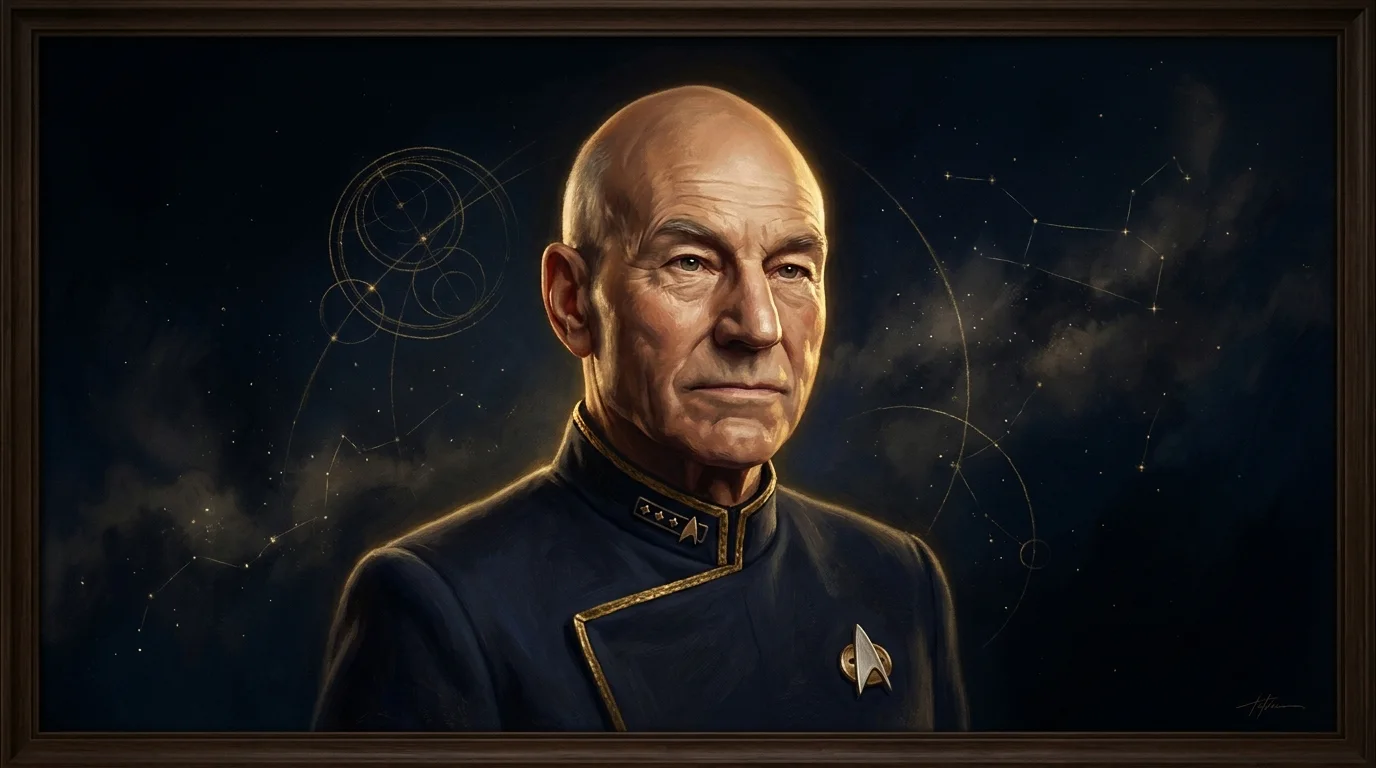
  • Cadena de Mando (Chain of Command) — Fecha Estelar 46360.8: «¡Hay Cuatro Luces!» y la Resistencia ante el Totalitarismo

    Cadena de Mando (Chain of Command) — Fecha Estelar 46360.8: «¡Hay Cuatro Luces!» y la Resistencia ante el Totalitarismo

    INTEL FILE // CELTRIS-III-MADRED // STARDATE 46360.8 STARFLEET HISTORICAL RECORD · ES / EN

    Orwell en el Siglo XXIV: La Verdad Objetiva Frente a la Tortura Cardassiana

    Orwell in the 24th Century: Objective Truth Against Cardassian Torture

    “There are four lights!”
    «¡Hay cuatro luces!»

    Telemetría y Ficha del Registro

    Log Telemetry & Dossier

    • Episodio / Temporada:Episode / Season:TNG 6×10 & 6×11 (1992)
    • Dirección / Guion:Directors / Writer:R. Scheerer & Les Landau / Frank Abatemarco
    • Actor Invitado:Guest Star:David Warner (Gul Madred) & Ronny Cox (Capt. Jellico)
    • Referente Literario:Literary Reference:1984 (George Orwell) & Informes de Amnistía Internacional
    Duelo dramático de Sir Patrick Stewart en Chain of Command: Hay Cuatro Luces / Sir Patrick Stewart in Chain of Command: There are four lights
    INTEL FILE // CELTRIS-III-MADRED STARDATE 46360.8

    1. La Trampa de Celtris III

    En la Fecha Estelar 46360.8, el Comando de la Flota Estelar releva temporalmente a Jean-Luc Picard del mando del USS Enterprise-D —entregándolo al estricto Capitán Edward Jellico— para asignarle una misión encubierta en las cavernas de Celtris III junto a la Doctora Crusher y el Teniente Worf. La inteligencia de la Federación sospecha que la Unión Cardassiana está desarrollando armas metagenéticas prohibidas. Sin embargo, toda la instalación subterránea resulta ser un señuelo diseñado con un único objetivo: capturar vivo a Picard.

    2. Dos Gigantes de la Royal Shakespeare Company Frente a Frente

    En la cámara de interrogatorios cardassiana se produce uno de los duelos interpretativos más memorables de la historia de la televisión: Sir Patrick Stewart frente al legendario actor británico David Warner (Gul Madred), antiguo compañero suyo en la Royal Shakespeare Company. Para preparar sus escenas, Stewart estudió horas de testimonios reales y documentación clínica proporcionada por Amnistía Internacional sobre el comportamiento de torturadores y supervivientes.

    Gul Madred implanta en el pecho de Picard un dispositivo de estimulación nerviosa cortical y pronto comprende que el dolor físico por sí solo no doblegará al Capitán de la Flota Estelar. El verdadero objetivo del interrogador totalitario no es extraer información militar (que Picard ni siquiera posee), sino quebrar su mente hasta que acepte como real la mentira del opresor.

    3. El Experimento de las Cinco Luces

    Inspirándose directamente en la Habitación 101 de 1984 de George Orwell (donde O'Brien exige a Winston Smith que vea cinco dedos cuando solo levanta cuatro), Gul Madred enciende cuatro focos intensos detrás de su escritorio y exige a Picard que diga que ve cinco. Cada vez que Picard responde «Veo cuatro luces», Madred activa el implante de dolor.

    En el último acto, Madred finge que el Enterprise ha sido destruido y ofrece a un Picard exhausto dos destinos: vivir el resto de sus días en comodidad y estudio arqueológico en Cardassia si tan solo pronuncia que hay cinco luces, o sufrir tortura perpetua. Cuando el Capitán Jellico logra acorralar a la flota cardassiana en la nebulosa McAllister y exige la liberación inmediata de Picard como prisionero de guerra, Madred hace un último intento desesperado por arrancarle la sumisión antes de que cruce la puerta.

    4. El Grito de la Dignidad Inquebrantable y la Confesión a Troi

    Ya libre de las cadenas, Picard se detiene, mira fijamente a su captor y ruge con toda la fuerza de su voz: «¡HAY CUATRO LUCES!» («There are four lights!»). Sin embargo, la grandeza del guion radica en su epílogo: en el diván de la Consejera Deanna Troi, Picard confiesa en voz baja que en aquel último instante estuvo a punto de rendirse y que, por un segundo, realmente creyó ver cinco luces.

    Nota de Archivo E-E-A-T: La profundidad dramática y filosófica de este registro es inseparable de su rigurosa formación en la Royal Shakespeare Company analizada en nuestro memorial de Sir Patrick Stewart, donde documentamos cómo el legado interpretativo de Sir Patrick Stewart como el Capitán Jean-Luc Picard transformó para siempre la ciencia ficción contemporánea.

    1. The Trap on Celtris III

    On Stardate 46360.8, Starfleet Command temporarily relieves Jean-Luc Picard of command of the USS Enterprise-D—handing the ship to the hardline Captain Edward Jellico—to assign Picard to a covert black-ops mission in the caverns of Celtris III alongside Dr. Beverly Crusher and Lieutenant Worf. Federation Intelligence suspects the Cardassian Union of developing illegal metagenic weapons. Yet the subterranean installation proves to be an elaborate snare designed for a single purpose: capturing Picard alive.

    2. Two Titans of the Royal Shakespeare Company Face to Face

    Inside the Cardassian interrogation chamber unfolds one of the greatest acting duels in television history: Sir Patrick Stewart opposite fellow British stage legend David Warner (Gul Madred), his former colleague from the Royal Shakespeare Company. To prepare for the role, Stewart reviewed hours of real-world clinical testimony and documentation compiled by Amnesty International regarding the psychology of torturers and survivors.

    Gul Madred implants a cortical nerve-stimulation device into Picard’s chest and quickly realizes that physical agony alone will not break the Starfleet captain. The totalitarian interrogator’s true objective is not merely to extract military intelligence, but to shatter Picard’s autonomous perception of reality until he willingly repeats the oppressor’s lie.

    3. The Experiment of the Five Lights

    Drawing direct inspiration from Room 101 in George Orwell’s 1984 (where O’Brien demands that Winston Smith see five fingers when holding up four), Gul Madred illuminates four blinding lamps behind his desk and demands that Picard state there are five. Every time Picard replies, “I see four lights,” Madred triggers the neural pain device.

    In the final act, Madred fabricates a report that the Enterprise has been destroyed in battle and offers an exhausted Picard a choice: live out his life in comfort studying Cardassian archaeology if he merely states he sees five lights, or endure unending agony. When Captain Jellico outmaneuvers the Cardassian fleet in the McAllister C-5 Nebula and compels Picard’s immediate release under interstellar treaty, Madred makes one final desperate attempt to claim victory before Picard walks out the door.

    4. The Cry of Unbroken Dignity and Confession to Troi

    Freed from his bonds, Picard pauses, locks eyes with his tormentor, and roars with every ounce of his Shakespearean voice: “THERE ARE FOUR LIGHTS!” Yet the episode’s crowning humanity lies in its quiet epilogue: sitting with Counselor Deanna Troi, Picard admits that at the very end he was ready to say anything to make the pain stop—and that, for a fleeting instant, he believed he could actually see five lights.

    E-E-A-T Archival Note: The dramatic and philosophical gravitas of this log entry stems directly from his rigorous Royal Shakespeare Company training analyzed in our Sir Patrick Stewart memorial, where we chronicle how the acting legacy of Sir Patrick Stewart as Captain Jean-Luc Picard forever elevated modern science fiction.

  • Lo Mejor de Ambos Mundos (The Best of Both Worlds) — Fecha Estelar 43989.1: Locutus de Borg y la Batalla de Wolf 359

    Lo Mejor de Ambos Mundos (The Best of Both Worlds) — Fecha Estelar 43989.1: Locutus de Borg y la Batalla de Wolf 359

    TACTICAL FILE // WOLF-359-LOCUTUS // STARDATE 43989.1 STARFLEET HISTORICAL RECORD · ES / EN

    Locutus de Borg: El Mayor Cliffhanger de la Historia y la Herida de Wolf 359

    Locutus of Borg: Television’s Greatest Cliffhanger and the Scar of Wolf 359

    “I am Locutus of Borg. Resistance is futile. Your life, as it has been, is over. From this time forward, you will service us.”
    «Soy Locutus de Borg. La resistencia es fútil. Su vida, tal como ha sido, ha terminado. A partir de este momento, nos servirán a nosotros.»

    Telemetría y Ficha del Registro

    Log Telemetry & Dossier

    • Episodios:Episodes:TNG 3×26, 4×01 & 4×02 («Family») — 1990
    • Dirección / Guion:Director / Writer:Cliff Bole / Michael Piller & Ronald D. Moore
    • Teatro de Operaciones:Theater of Operations:Jouret IV → Nebulosa Paulson → Wolf 359 → Sector 001
    • Bajas de la Flota:Starfleet Casualties:39 Naves Estelares / ~11,000 Efectivos en Wolf 359
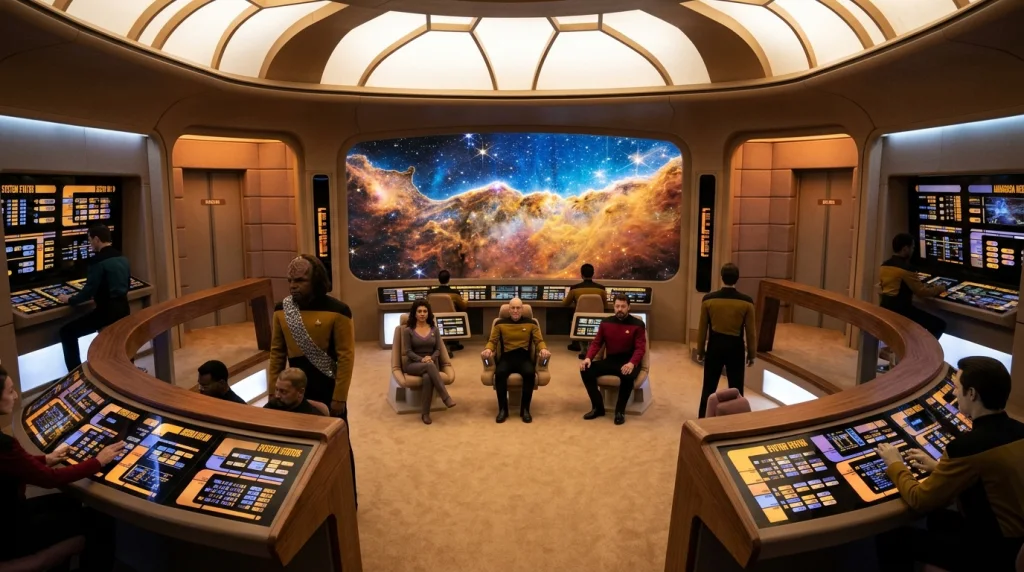
    Puente del USS Enterprise NCC-1701-D durante la crisis Borg en The Best of Both Worlds / USS Enterprise-D bridge during the Borg crisis
    TACTICAL FILE // WOLF-359-LOCUTUS STARDATE 43989.1

    1. El Cráter de Jouret IV y la Sombra del Cubo

    En la Fecha Estelar 43989.1, el USS Enterprise NCC-1701-D responde a una llamada de socorro en la colonia de Nueva Providencia (Jouret IV), solo para encontrar un cráter gigantesco donde toda la ciudad ha sido arrancada de la corteza planetaria. La especialista en táctica Borg, Comandante Shelby, confirma el peor temor del Almirante Hanson: el Colectivo Borg ha llegado al corazón del espacio de la Federación un año antes de lo previsto.

    En la víspera del enfrentamiento dentro de la nebulosa Paulson, Jean-Luc Picard confiesa a Guinan su angustia ante la posibilidad de que la civilización humana haya alcanzado su ocaso. Guinan le responde con la serenidad de quien ya sobrevivió a la destrucción de su mundo natal: incluso si la Tierra cae, mientras queden unos pocos seres humanos, el espíritu prevalecerá.

    2. La Asimilación de Picard: Nace Locutus de Borg

    Los Borg no buscan destruir el Enterprise en el primer asalto; buscan una voz humana con autoridad para facilitar la asimilación de la Tierra. Tras perforar los escudos del puente, secuestran a Picard y lo someten a una mutilación cibernética y neuronal. En el cierre de la tercera temporada —el cliffhanger más célebre en la historia de la televisión de ciencia ficción—, la pantalla principal del puente muestra a Picard transformado en Locutus de Borg, mientras el Comandante Riker pronuncia las tres palabras inmortales: «Mr. Worf… Fire».

    3. La Devastación de Wolf 359 y el Rescate

    Porque el Colectivo posee ahora todos los códigos tácticos, frecuencias de escudos y estrategias de combate almacenadas en la mente de Picard, la flota de cuarenta naves reunida por el Almirante Hanson en el sistema Wolf 359 es aniquilada por completo: 39 naves destruidas y 11.000 vidas perdidas, incluyendo a Jennifer Sisko a bordo del USS Saratoga.

    Alcanzando el Cubo en la órbita de la Tierra (Sector 001), Riker ejecuta una maniobra de distracción con separación del platillo que permite a Worf y Data infiltrarse y secuestrar a Locutus. Conectado a la subrutina cortical de Picard en la enfermería, el Comandante Data logra escuchar una sola palabra susurrada desde el fondo de la conciencia aprisionada del Capitán: «Dormir» (Sleep). Accediendo a la subrutina no protegida de regeneración Borg, Data ordena a todo el Cubo entrar en hibernación, provocando una sobrecarga que salva a la Tierra.

    4. El Llanto en el Barro de La Barre («Family»)

    Aunque la implantes cibernéticos son retirados, la herida moral permanece abierta. En el episodio inmediatamente posterior, «Family» (TNG 4×02), Sir Patrick Stewart protagoniza una escena antológica junto a Jeremy Kemp (su hermano Robert Picard) en los viñedos de La Barre. Tras pelear en el barro, Jean-Luc rompe a llorar confesando la violación absoluta de su voluntad: «Lo usaron todo… no pude detenerlos, Robert. Debería haber sido capaz de detenerlos».

    Nota de Archivo E-E-A-T: La profundidad dramática y filosófica de este registro es inseparable de su rigurosa formación en la Royal Shakespeare Company analizada en nuestro memorial de Sir Patrick Stewart, donde documentamos cómo el legado interpretativo de Sir Patrick Stewart como el Capitán Jean-Luc Picard transformó para siempre la ciencia ficción contemporánea.

    1. The Crater on Jouret IV and the Shadow of the Cube

    On Stardate 43989.1, the USS Enterprise NCC-1701-D responds to a distress call from the New Providence colony on Jouret IV, only to discover a massive crater where the entire settlement has been scooped out of the planet’s crust. Borg tactical specialist Lieutenant Commander Shelby confirms Admiral Hanson’s worst fear: the Borg Collective has reached Federation space far ahead of Starfleet projections.

    On the eve of battle inside the Paulson Nebula, Jean-Luc Picard confides in Guinan his dread that fifteen centuries of human civilization may be coming to an end. Guinan reassures him with the quiet wisdom of a survivor whose own homeworld was scattered by the Borg: even in the darkest hour, as long as a handful of humans endure, the spirit will survive.

    2. Picard’s Assimilation: The Birth of Locutus

    The Borg do not seek merely to destroy the Enterprise in their initial assault; they want a human voice of supreme authority to speak for the Collective during the assimilation of Earth. Breaching the flagship’s shields, Borg drones abduct Picard and subject him to cybernetic and neural assimilation. In the season three finale—universally regarded as television’s greatest cliffhanger—the main viewscreen reveals Picard transformed into Locutus of Borg, prompting Commander Riker’s unforgettable command: “Mr. Worf… Fire.”

    3. The Massacre at Wolf 359 and the Rescue

    Because the Borg hive mind now possesses every tactical code, shield modulation, and fleet strategy stored in Picard’s memory, the forty-starship armada assembled by Admiral Hanson at Wolf 359 is decimated: 39 starships destroyed and 11,000 Starfleet personnel lost, including Jennifer Sisko aboard the USS Saratoga.

    Intercepting the Cube in Earth orbit (Sector 001), Riker executes a daring saucer separation distraction that allows Worf and Data to beam aboard and retrieve Locutus. Interfacing directly with Picard’s neural implants in sickbay, Commander Data hears a single word whispered from the depths of the Captain’s imprisoned consciousness: “Sleep.” Accessing the unprotected Borg regeneration subroutine, Data commands the entire Cube to enter hibernation, triggering a feedback cascade that saves Earth.

    4. Breakdown in the Vineyards of La Barre («Family»)

    Though the cybernetic implants are surgically removed, the psychological violation remains raw. In the immediate follow-up episode, “Family” (TNG 4×02), Sir Patrick Stewart delivers a wrenching performance opposite Jeremy Kemp (his brother Robert Picard) in the vineyards of La Barre. Wrestling in the mud, Jean-Luc collapses in tears, confessing his helplessness: “They used me to kill and to destroy, and I couldn’t stop them! I should have been able to stop them!”

    E-E-A-T Archival Note: The dramatic and philosophical gravitas of this log entry stems directly from his rigorous Royal Shakespeare Company training analyzed in our Sir Patrick Stewart memorial, where we chronicle how the acting legacy of Sir Patrick Stewart as Captain Jean-Luc Picard forever elevated modern science fiction.
  • La Medida de un Hombre (The Measure of a Man) — Fecha Estelar 42523.7: El Juicio por el Alma del Comandante Data

    La Medida de un Hombre (The Measure of a Man) — Fecha Estelar 42523.7: El Juicio por el Alma del Comandante Data

    JAG CASE // STARBASE-173-DATA // STARDATE 42523.7 STARFLEET HISTORICAL RECORD · ES / EN

    Consciencia Sintética, Autodeterminación y el Fin de la Propiedad sobre la Vida

    Synthetic Consciousness, Self-Determination, and the End of Sentient Property

    “Your Honor, Starfleet was founded to seek out new life. Well, there it sits! Waiting. You wanted a chance to make law. Well, here it is. Make a good one.”
    «Su Señoría, la Flota Estelar fue fundada para buscar nuevas formas de vida. ¡Pues bien, ahí está sentada! Esperando. Usted quería la oportunidad de hacer jurisprudencia. Aquí la tiene. Haga una que sea justa.»

    Telemetría y Ficha del Registro

    Log Telemetry & Dossier

    • Episodio / Temporada:Episode / Season:TNG 2×09 (1989) — Extended Edition
    • Dirección / Guion:Director / Writer:Robert Scheerer / Melinda M. Snodgrass
    • Jurisdicción:Jurisdiction:Tribunal JAG — Base Estelar 173 / Starbase 173
    • Partes en Litigio:Litigants:Cmdr. Bruce Maddox vs. Lt. Cmdr. Data
    El Capitán Jean-Luc Picard defendiendo los derechos civiles del Comandante Data en The Measure of a Man / Captain Picard in The Measure of a Man
    JAG CASE // STARBASE-173-DATA STARDATE 42523.7

    1. El Dilema de la Base Estelar 173

    Escrito por la exabogada Melinda M. Snodgrass, «The Measure of a Man» es reconocido unánimemente como el episodio que consolidó la madurez filosófica de Star Trek: The Next Generation. En la Fecha Estelar 42523.7, el Comandante Bruce Maddox —el único miembro del comité que años atrás votó en contra de admitir a Data en la Academia de la Flota Estelar— sube a bordo del USS Enterprise-D con una orden de transferencia: pretende desmontar la red positrónica del Comandante Data para estudiarla y fabricar cientos de androides similares.

    Cuando Data evalúa que el procedimiento de Maddox carece de garantías y destruiría la esencia irrepetible de sus recuerdos (el «sabor» de sus experiencias), presenta su renuncia formal a la Flota Estelar. Maddox contraataca con un argumento escalofriante: Data no puede renunciar porque no es una persona, sino un «tostador sofisticado», propiedad material de la Flota.

    2. La Trampa Procesal y el Dolor de Riker

    Al carecer la recién inaugurada Base Estelar 173 de personal jurídico completo, la Juez Abogado General, Capitán Phillipa Louvois, aplica el reglamento sumario: el Capitán Jean-Luc Picard actuará como abogado defensor de Data, y el Comandante William Riker se ve obligado a ejercer como fiscal bajo amenaza de que, si se niega a hacerlo con rigor, Louvois fallará automáticamente a favor de Maddox.

    En una primera sesión devastadora, Riker demuestra la naturaleza mecánica de Data retirándole un brazo y accionando su interruptor dorsal de apagado, dejando al androide inerte como una marioneta sin hilos: «Pinocho ha visto cortados sus hilos».

    3. La Revelación de Guinan en Ten Forward

    Abatido en la cubierta Ten Forward, Picard conversa con Guinan (Whoopi Goldberg). Sin mencionar jamás la palabra al principio, Guinan guía a Picard hacia la raíz histórica del plan de Maddox: un ejército de seres conscientes trabajando en condiciones peligrosas sin derecho a elegir su destino, considerados objetos en beneficio de sus amos. Picard pronuncia entonces la palabra que cambia el rumbo del juicio: «Esclavitud».

    4. El Alegato Final por el Alma Humana y Sintética

    De regreso en la sala de audiencias, Picard llama a declarar al propio Data, quien muestra sus posesiones más íntimas: sus medallas al valor, un libro regalado por el Capitán y el holograma de Tasha Yar. Acto seguido, Picard interroga a Maddox sobre los tres requisitos de la consciencia (inteligencia, autoconsciencia y sensibilidad) y desafía al tribunal a probar que el propio Picard o cualquiera en la sala posee «alma». El fallo histórico de Louvois reconoce a Data el derecho constitucional a elegir su propio destino.

    Nota de Archivo E-E-A-T: La profundidad dramática y filosófica de este registro es inseparable de su rigurosa formación en la Royal Shakespeare Company analizada en nuestro memorial de Sir Patrick Stewart, donde documentamos cómo el legado interpretativo de Sir Patrick Stewart como el Capitán Jean-Luc Picard transformó para siempre la ciencia ficción contemporánea.

    1. The Dilemma at Starbase 173

    Written by former attorney Melinda M. Snodgrass, “The Measure of a Man” is universally hailed as the episode where Star Trek: The Next Generation found its philosophical soul. On Stardate 42523.7, Commander Bruce Maddox—the sole cyberneticist who years earlier opposed Data’s admission to Starfleet Academy—arrives aboard the USS Enterprise-D with transfer orders: he intends to disassemble Commander Data’s positronic brain to reverse-engineer and mass-produce hundreds of androids.

    Realizing that Maddox’s procedure is flawed and would erase the ineffable «flavor» of his personal memories despite preserving raw data, Data tenders his resignation from Starfleet. Maddox counters with a chilling legal claim: Data cannot resign because he is not a sentient person, but a piece of Starfleet property.

    2. The Procedural Trap and Riker’s Agony

    Because the newly established Starbase 173 lacks a full legal staff, JAG officer Captain Phillipa Louvois invokes summary regulations: Captain Jean-Luc Picard must serve as Data’s defense counsel, while Commander William Riker is forced to act as prosecutor—under the ultimatum that if Riker does not argue to the best of his ability, Louvois will summarily rule in Maddox’s favor.

    In a devastating opening session, Riker demonstrates Data’s mechanical construction by detaching his cybernetic arm and switching off his dorsal power toggle, leaving his friend slumped lifelessly in the witness chair: “Pinocchio’s strings have been cut.”

    3. Guinan’s Revelation in Ten Forward

    Despondent in Ten Forward, Picard confides in Guinan (Whoopi Goldberg). Gently steering the conversation, Guinan points out that Maddox’s vision of an army of disposable, sentient beings performing hazardous labor without legal rights mirrors one of the darkest chapters of human history. Picard whispers the word that transforms his entire legal strategy: “Slavery.”

    4. The Closing Argument for Sentient Rights

    Returning to the courtroom, Sir Patrick Stewart delivers a masterclass in forensic oratory. After Data displays his most cherished personal possessions—his Starfleet medals, a book gifted by Picard, and a hologram of Tasha Yar—Picard cross-examines Maddox on the criteria of sentience (intelligence, self-awareness, consciousness) and challenges the court to prove that Picard himself possesses a soul. Judge Louvois’s landmark ruling affirms that Data is not property and holds the fundamental right to choose his own destiny.

    E-E-A-T Archival Note: The dramatic and philosophical gravitas of this log entry stems directly from his rigorous Royal Shakespeare Company training analyzed in our Sir Patrick Stewart memorial, where we chronicle how the acting legacy of Sir Patrick Stewart as Captain Jean-Luc Picard forever elevated modern science fiction.

  • La Luz Interior (The Inner Light) — Fecha Estelar 45944.1: Vivir Toda una Vida en 25 Minutos

    La Luz Interior (The Inner Light) — Fecha Estelar 45944.1: Vivir Toda una Vida en 25 Minutos

    LOG FILE // TNG-5X25-KATAAN // STARDATE 45944.1 STARFLEET HISTORICAL RECORD · ES / EN

    Kamin de Ressik: Cuarenta Años de Amor, Memoria y Extinción Estelar

    Kamin of Ressik: Forty Years of Love, Memory, and Stellar Extinction

    “Seize the time, Meribor. Live now! Make now always the most precious time. Now will never come again.”
    «Aprovecha el tiempo, Meribor. ¡Vive ahora! Haz que el presente sea siempre el instante más preciado. El ahora nunca volverá a repetirse.»

    Telemetría y Ficha del Registro

    Log Telemetry & Dossier

    • Episodio / Temporada:Episode / Season:TNG 5×25 (1992) — Hugo Award Winner
    • Dirección / Guion:Director / Writers:Peter Lauritson / Morgan Gendel & P. A. Fields
    • Sistema Estelar:Star System:Kataan (Comunidad de Ressik / Ressik Community)
    • Artefacto Histórico:Historical Artifact:Flauta Ressikaniana de Latón / Ressikan Flute
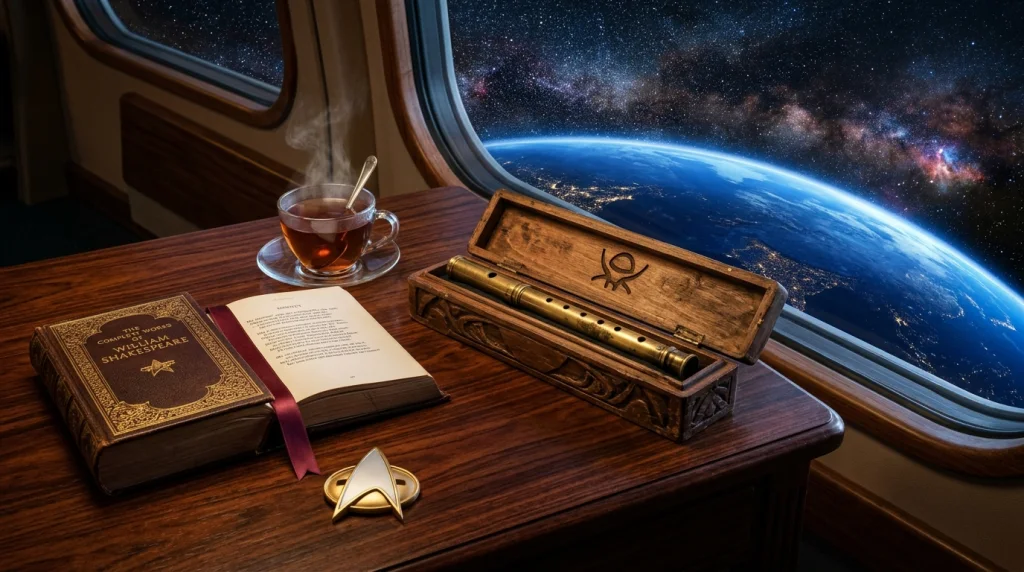
    Flauta ressikaniana de Kataan e insignias del Capitán Jean-Luc Picard en The Inner Light / Ressikan flute from The Inner Light
    LOG FILE // TNG-5X25-KATAAN STARDATE 45944.1

    1. El Encuentro con la Sonda del Sistema Parvenium

    En la Fecha Estelar 45944.1, mientras el USS Enterprise NCC-1701-D realiza un reconocimiento magnético rutinario en el sector Parvenium, la nave tropieza con una sonda espacial desconocida de diseño pre-warp. En cuestión de segundos, el artefacto lanza un haz nucleónico directo hacia el puente de mando que deja inconsciente al Capitán Jean-Luc Picard. Mientras el Comandante William Riker y la Doctora Beverly Crusher intentan sin éxito desconectar el enlace neuronal durante veinticinco minutos de tiempo real de la Federación, Picard despierta bajo un sol abrasador en un mundo que no es el suyo.

    Allí, una mujer llamada Eline (interpretada con luminosa ternura por Margot Rose) le asegura que él no es ningún capitán estelar, sino Kamin, un herrero de hierro de la aldea de Ressik, en el planeta Kataan, que acaba de recuperarse de unas fiebres delirantes. Durante los primeros años de esa nueva existencia, Picard se resiste a olvidar su nave, esculpiendo diagramas de control y observando el cielo nocturno en busca del Enterprise.

    2. El Paso de las Décadas y la Agonía de un Sol

    Con el transcurso de las estaciones, la vida cotidiana y el amor profundo de Eline transforman al austero oficial de la Flota Estelar. Kamin aprende a tocar una sencilla flauta de metal ressikaniana bajo el gran árbol de la plaza, construye un hogar, planta un jardín y hace aquello a lo que Jean-Luc Picard había renunciado para servir en el espacio: formar una familia. Nacen sus hijos, Meribor y Batai (llamado así en honor a su mejor amigo fallecido), y más tarde su primer nieto.

    Sin embargo, Kamin aplica el método científico de la Flota Estelar a su nuevo mundo. Construye un telescopio rudimentario con tubos de hierro y lentes pulidas a mano y descubre una verdad aterradora: el sol de Kataan está entrando en fase de nova, evaporando los océanos y condenando a toda la biosfera planetaria. Sus advertencias al consejo de administradores son recibidas con un silencio compasivo: los líderes ya lo sabían, pero carecían de naves interestelares para evacuar a su población.

    3. El Monumento Viviente de una Civilización

    En el clímax de la crónica —uno de los momentos más conmovedores en la carrera de Sir Patrick Stewart—, un Kamin anciano y encorvado, que ya ha enterrado a su amada esposa Eline, es llevado por sus hijos a presenciar el lanzamiento de un pequeño cohete suborbital. En ese instante se le aparece el espíritu de Eline y su amigo Batai jóvenes para revelarle el propósito de toda su vida en Ressik:

    Kataan murió mil años atrás. Sabiendo que no podían salvarse, construyeron una única sonda con el fin de encontrar a un viajero de las estrellas y regalarle toda una vida entre ellos. «Tú nos has visto. Has amado a nuestros hijos. Ahora, nosotros vivimos en ti. Háblales de nosotros, Kamin».

    4. El Silencio en el Puente y el Solo de Flauta

    Cuando el haz se apaga y Picard recupera el conocimiento en el puente del USS Enterprise-D, descubre que apenas han transcurrido veinticinco minutos. Pero dentro de la sonda recuperada en el hangar de carga yace una pequeña caja tallada mil años antes. Al abrirla en la soledad de su camarote, Picard encuentra la flauta de Kamin. La estrecha contra su pecho y, frente al ventanal estelar, interpreta la melodía de un mundo desaparecido que seguirá vivo mientras él respire.

    Nota de Archivo E-E-A-T: La profundidad dramática y filosófica de este registro es inseparable de su rigurosa formación en la Royal Shakespeare Company analizada en nuestro memorial de Sir Patrick Stewart, donde documentamos cómo el legado interpretativo de Sir Patrick Stewart como el Capitán Jean-Luc Picard transformó para siempre la ciencia ficción contemporánea.

    1. Encounter with the Parvenium Probe

    On Stardate 45944.1, while the USS Enterprise NCC-1701-D conducts a routine magnetic wave survey in the Parvenium sector, the flagship encounters an unidentified pre-warp space probe. Within seconds, the craft locks a nucleonic beam directly onto the main bridge, rendering Captain Jean-Luc Picard unconscious. As Commander William Riker and Dr. Beverly Crusher struggle for twenty-five minutes of Federation real time to sever the neural link without killing their captain, Picard awakens beneath a blazing sun on a world not his own.

    There, a woman named Eline (portrayed with luminous warmth by Margot Rose) insists he is not a starship captain at all, but Kamin, an ironweaver in the community of Ressik on the planet Kataan, recovering from a severe fever. For the first years of this existence, Picard resists surrendering his identity, sketching starship schematics and scanning the night skies for the Enterprise.

    2. Passing Decades and a Dying Sun

    As the years unfold, everyday life and Eline’s unwavering devotion transform the stoic Starfleet officer. Kamin learns to play a simple brass Ressikan flute beneath the village tree, builds a home, tends a garden, and embraces the one path Jean-Luc Picard had sacrificed for duty: raising a family. His daughter Meribor and son Batai (named after his late closest friend) are born, followed decades later by his grandson.

    Yet Kamin brings the scientific rigor of Starfleet to his adopted world. Constructing a rudimentary telescope from iron tubing and hand-ground lenses, he uncovers a devastating truth: Kataan’s sun is going nova, parching the soil and dooming the entire biosphere. When he presents his findings to the planetary administrators, he learns that they already know—and that their civilization lacks the technology to evacuate their people among the stars.

    3. The Living Monument of a Vanished World

    In the episode’s climax—widely celebrated as the crowning dramatic achievement of Sir Patrick Stewart’s television career—an elderly, frail Kamin, having already mourned the passing of his beloved Eline, is urged outdoors by his children to watch the launch of a small rocket into the blinding sky. At that moment, Eline and Batai appear before him as they were in youth to reveal the truth:

    Kataan perished a thousand years ago. Knowing they could not save their people, they launched a single capsule into space to find one traveler who could live a lifetime among them and remember their songs, their families, and their dreams. “You have seen us. Now you are our teacher. Tell them of us, my darling.”

    4. Silence on the Bridge and the Ressikan Flute

    When the nucleonic beam terminates and Picard regains consciousness on the bridge of the USS Enterprise-D, barely twenty-five minutes have elapsed. Yet inside the probe retrieved in the cargo bay rests a small rectangular box sealed a millennium earlier. Opening it alone in his quarters, Picard lifts out Kamin’s flute, cradles it against his heart, and plays the haunting melody of a civilization that now endures forever within his memory.

    E-E-A-T Archival Note: The dramatic and philosophical gravitas of this log entry stems directly from his rigorous Royal Shakespeare Company training analyzed in our Sir Patrick Stewart memorial, where we chronicle how the acting legacy of Sir Patrick Stewart as Captain Jean-Luc Picard forever elevated modern science fiction.

Bitácora del Capitán · Directorio de Archivos Subespaciales LCARS Captain's Log · LCARS Subspace Archive Directory

BITÁCORA DEL CAPITÁN // STARFLEET DATA MATRIX

Explora las categorías oficiales de Bitácora del Capitán (Bitácora Estelar) en Español e Inglés o regresa al puente de mando del USS Enterprise NCC-1701-D:

Explore the official archive categories of Captain's Log — Bitácora del Capitán (Bitácora Estelar) in Spanish and English or return to the main bridge of the USS Enterprise NCC-1701-D: